Ductwork Popping at Startup: Pressure or Thermal Movement?
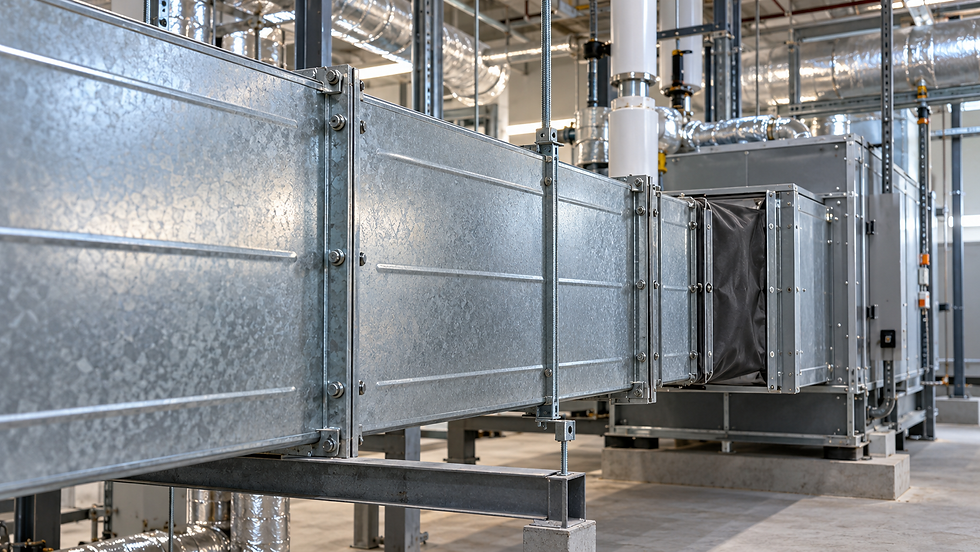
AI-generated cover image for illustration.
A metal panel snaps when the blower starts, then bangs again as it stops. Elsewhere, a duct gives lighter ticks after warm air has been flowing for a while. Both get called “duct expansion,” but they warrant different investigations.
Trace startup and shutdown noise before adding screws, insulation or a silencer. Investigate pressure-driven panel movement, thermal movement at joints or supports, and equipment or damper vibration and impact. More than one can occur.

Original Nexora schematic. Conceptual only; not a construction or control detail.
First confirm that the sound comes from a duct
An unexplained furnace bang, particularly at ignition, needs professional investigation. So do new severe equipment noise, repeated protective shutdowns or visible duct collapse. Do not keep cycling the system. Follow emergency instructions for gas odor, smoke or a carbon-monoxide alarm.
Trane distinguishes familiar duct pinging from new or unusually loud sounds in its HVAC noises guidance. Locate the source safely: sound at a grille may originate at a distant panel, damper, access door or the air-handling unit.
Pressure-driven deflection and oil canning
The difference between pressure inside and outside a duct loads its metal wall. A flexible panel can change shape abruptly and produce a pop or boom. “Oil canning” describes this rapid movement; it does not identify the underlying cause.
In its rooftop installation literature, Trane identifies oil canning in lightly constructed ducts and points designers toward appropriate duct construction. A wide panel, its joints, reinforcement and pressure exposure should therefore be examined together. Excessive operating pressure is one possible trigger; inadequate panel stiffness at the intended duty is another.
For an illustrative panel area of 0.60 m² under a uniform 200 Pa pressure difference, the resultant load is 200 × 0.60 = 120 N. This pressure-times-area calculation illustrates the load. It establishes neither permissible pressure nor whether the panel will snap.
Return-side suction can pull a panel inward, while positive supply pressure can push one outward. The direction and magnitude of the local pressure difference matter. A single total external static-pressure reading at the equipment cannot describe every panel's loading, and a steady reading may miss a short transition.
Thermal movement and vibration leave different clues
Temperature changes alter metal dimensions. Restraint or rubbing at a contact point can produce ticks or a sudden release. Noise after the duct warms or cools, or after airflow stops, warrants a thermal investigation. Trane's guidance recognizes expansion and contraction as a source of pinging.
A rattle or hum that persists while the blower runs suggests a different check: rotating equipment, loose parts, supports or rigid connections transmitting vibration. ASHRAE describes how mechanical vibration can travel through attached ductwork and building elements in its Noise and Vibration Control chapter. An opening or closing damper can also create a discrete impact that resembles a panel pop.
Timing is a clue, not proof. Blower operation, temperature change and damper movement can begin close together. Identify the event the noise follows most consistently, then obtain evidence at that location.
Build an event record before changing the system
Record the listening location, accessible duct section and mode. Does the noise follow blower start, speed change, zone-damper movement, heating or cooling onset, blower stop, or a delay? Note whether the same panel moves each time.
Record recent filter, fan-setting, equipment, zoning or duct changes. “Started after the new air handler” is useful history, not a diagnosis. A changed airflow requirement or sequence may expose a previously unnoticed weak panel.
Occupants can log events and record from a safe location. Do not remove covers, reach near fans, press on energized equipment or enter unsafe ceiling voids. A recording helps reproduce the sequence; it cannot measure pressure or establish that a furnace bang is harmless.
The technician's pressure investigation
Capture normal modes and the troublesome transition. Measure supply and return pressures, airflow, fan settings and relevant component pressure drops. Record filter and coil condition and damper positions. Every reading needs a defined operating condition.
DOE-hosted duct retrofit assessment guidance recommends checking external static pressure and filter pressure drop against the installed equipment's requirements. PNNL also emphasizes manufacturer-specific pressure measurement locations. Test points and the treatment of filters or coils depend on the equipment arrangement and its published performance data.
Correlate sound and panel movement with local pressure or a suitable trend. Check zone transitions and control commands. A brief event may need instrumentation with a faster response than routine service logging provides.
Compare readings with the manufacturer's operating envelope, design duty and construction pressure class. One rule-of-thumb static pressure does not suit all systems. Low airflow and excessive restriction still need correction if stiffening the panel stops the noise.
Inspect the panel as a construction assembly
Inspect the moving panel's dimensions, sheet thickness, seams, joints, reinforcement, supports and damage. Check access doors and connections. Verify the specified pressure duty and whether alterations changed support or restraint.
SMACNA's duct construction standards overview identifies materials, reinforcement, assembly and supports as part of duct construction. A repair should be detailed against the applicable standard and project requirements by the responsible contractor or designer. Gauge alone is an incomplete specification, and a generic screw spacing from the internet is not a repair design.
For thermal movement, inspect contact and restraint points across the temperature cycle. A designed support, clearance or movement detail may be needed. Do not casually loosen hangers or alter rated assemblies. For vibration, check the source and intended isolation.
Choose a correction that addresses the evidence
If excessive restriction is confirmed, correct the identified cause and verify airflow again. This may involve maintenance, a suitably selected filter arrangement, an obstructed return path or a duct modification. Filter efficiency and pressure drop must be considered together; simply removing filtration is not an acceptable permanent solution.
If pressure and airflow are appropriate but the panel is under-stiffened or damaged, the designer may specify reinforcement or replacement. The detail must account for joints, loads, access and the duct's pressure duty. A sealant bead or extra thermal wrap should not be credited as structural reinforcement without a design basis.
For a controls-related event, review fan and damper sequencing within manufacturer limits. Do not arbitrarily slow fans or defeat interlocks. Maintain required cooling airflow, furnace temperature rise, ventilation and pressure-control duties.
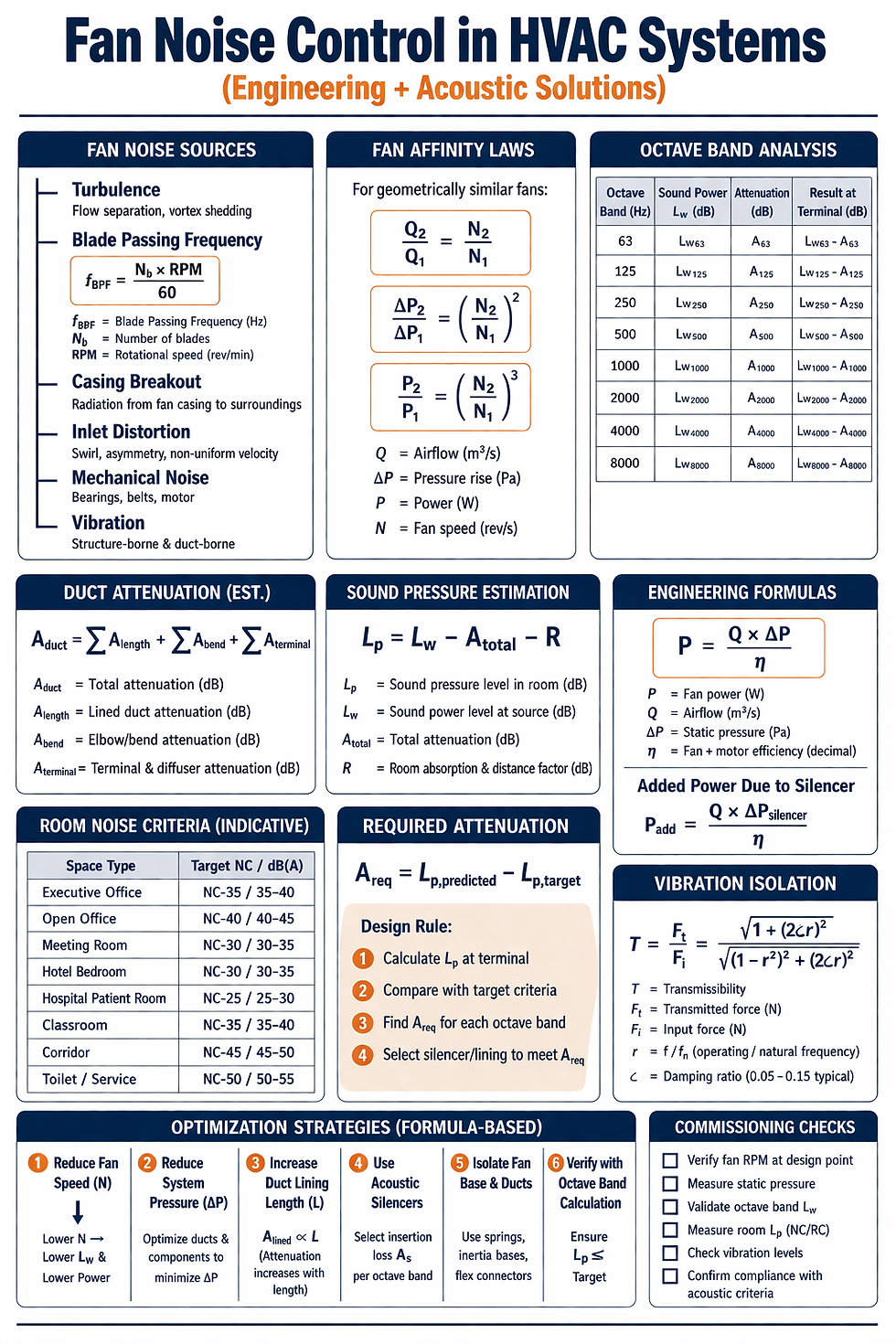
Internal acoustic absorption treats travelling sound. A barrier or engineered lagging assembly limits sound radiating through an enclosure. Vibration isolation addresses mechanical transmission. These are different from stopping a panel's pressure-driven snap. Nexora's fan-noise engineering guide covers broader acoustic paths when investigation identifies fan sound rather than the panel itself.
Avoid repairs that create a second problem
Do not block returns, close numerous outlets or stuff ducts with foam. Experimental screws can affect concealed services, linings and duct integrity. Added materials need suitable temperature, airstream, cleaning and fire-performance properties.
Keep fire compliance separate from acoustic claims. Johns Manville's fire-rating FAQ explains that a material's flame-spread and smoke-developed classification does not itself provide an hourly rating for an assembly. Preserve specified firestopping, damper access and rated construction when opening ceilings or altering supports.
Close the repair with repeatable verification
Repeat the relevant starts, stops, speed changes and zone transitions. Observe the panel and repeat pressure and airflow checks. If heating and cooling conditions differ, document which modes have been tested and what remains to be verified.
Nexora's TAB resource can support an organized commissioning record. The useful handover includes the diagnosed mechanism, repair detail, measured operating conditions and any remaining noise. “It did not bang during one visit” is weaker evidence than a repeatable test showing stable operation at the conditions that previously caused the complaint.

Comments