HVAC Water Treatment: Preventing Scale, Corrosion and Biological Growth
Updated: 3 days ago
Water is one of the most important working fluids in HVAC systems. It carries cooling energy through chilled-water systems, rejects heat through condenser-water systems, and supports heat exchange through coils, chillers, pumps, cooling towers, plate heat exchangers and pipe networks.
However, if the water quality is not properly controlled, the same water that helps the system operate can slowly damage it. Poor water treatment can lead to scale formation, corrosion, biological growth, blocked strainers, reduced heat transfer, higher energy consumption and premature equipment failure.
A proper HVAC water-treatment program is not only about adding chemicals. It is a complete engineering process that includes water analysis, flushing, filtration, chemical treatment, monitoring, testing, cleaning and proper maintenance. (HVAC Water Treatment: Preventing Scale Corrosion and Biological Growth)
Why HVAC Water Treatment Matters
In chilled-water and condenser-water systems, water continuously circulates through many important components. If the water contains high minerals, oxygen, suspended solids or biological contamination, it can directly affect the system performance.
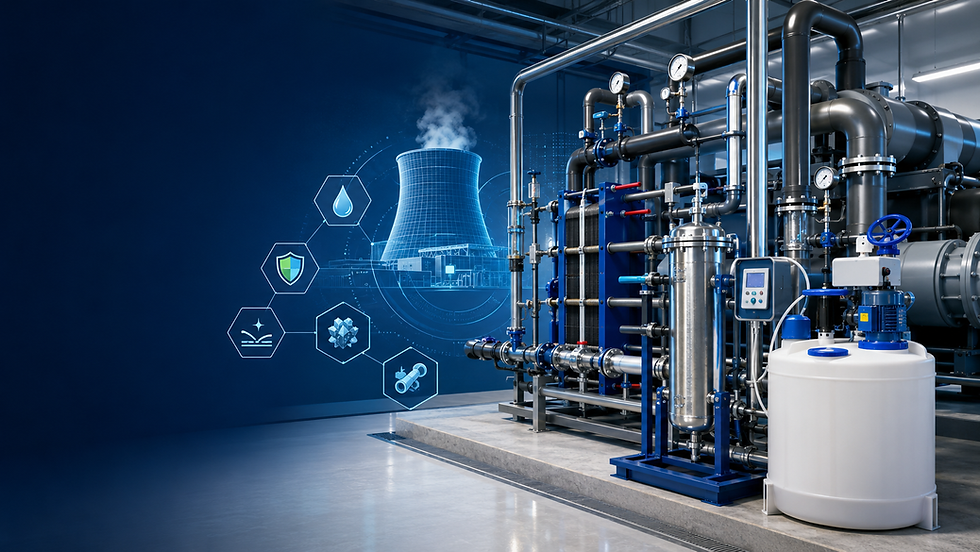
Download the full design guide PDF with detailed calculations, fan sizing, code compliance, and real project insights. Built for HVAC engineers and MEP consultants. (HVAC Water Treatment: Preventing Scale Corrosion and Biological Growth)
For detailed calculations, project-specific design, and authority-compliant solutions, contact our engineering team.
Email : info@nexoradesign.net
Phone : +94 76 720 5408
Web : www.nexoradesign.net
Read related blogs
Hydraulic Decoupling in Chilled-Water Plants Explained
How Air and Dirt Separators Improve Chilled-Water Performance
Automatic Balancing Valves vs Manual Balancing Valves: Which Is Better for HVAC Hydronic Systems?
Pressure-Independent Control Valves: Selection and Application Guide
Understanding Low Delta-T Syndrome in Chilled-Water Systems How to Size Chilled-Water Pipes Using Velocity and Friction Limits
Supply-Air Short-Circuiting: Causes, Diagnosis and Design Solutions
Designing the complete plant? The Chilled Water System Design Handbook covers chiller selection, flow and pipe sizing, pump head, control valves, cooling towers, controls and commissioning - with a full worked design example.


Comments