Return-Air Grille Sizing: Face Velocity, Noise and Pressure-Loss Limits
Updated: 3 days ago
Return-air grilles are often treated as simple architectural openings: calculate the airflow, select a grille that fits the ceiling or wall and connect it to the return-air system. In practice, an undersized or poorly selected return grille can create noticeable air noise, excessive system resistance, difficult balancing, ceiling-tile vibration and uncomfortable air movement near occupants.
Correct return-air grille sizing requires more than dividing airflow by a convenient velocity. The designer must distinguish between gross face area, free area and grille neck area, then verify the selected product against the manufacturer’s pressure-loss and acoustic data. (Return-Air Grille Sizing: Face Velocity, Noise and Pressure-Loss Limits)
This article explains how to size return-air grilles using face velocity, noise criteria and pressure-loss limits, with practical selection ranges and a worked engineering example.
1. Why Return-Air Grille Sizing Matters
A return grille must allow room air to enter the return-air system without creating excessive restriction or objectionable noise.
An undersized grille may cause:

Download the full design guide PDF with detailed calculations, fan sizing, code compliance, and real project insights. Built for HVAC engineers and MEP consultants. (Return-Air Grille Sizing: Face Velocity, Noise and Pressure-Loss Limits)
For detailed calculations, project-specific design, and authority-compliant solutions, contact our engineering team.
Email : info@nexoradesign.net
Phone : +94 76 720 5408
Web : www.nexoradesign.net
Read related blogs
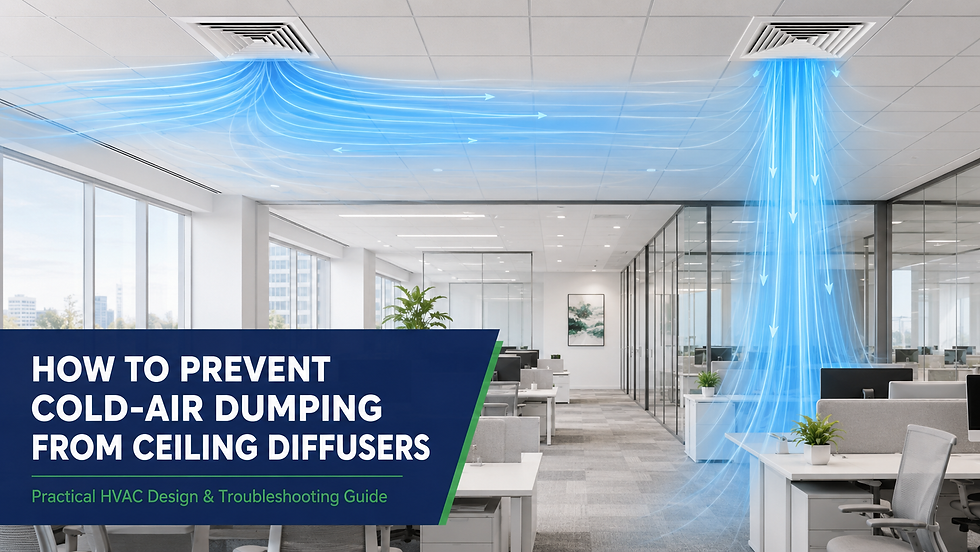
How to Prevent Cold-Air Dumping from Ceiling Diffusers
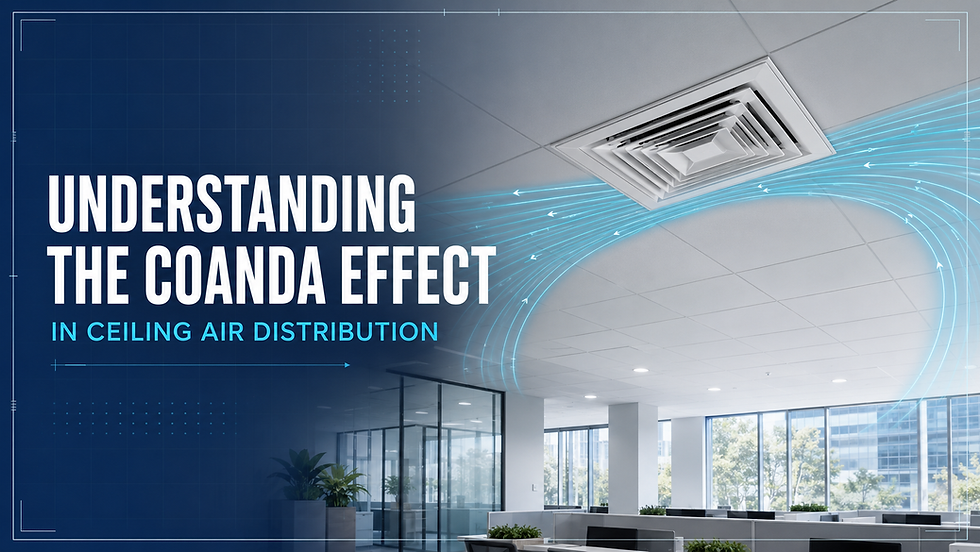
Understanding the Coandă Effect in Ceiling Air Distribution
How to Select Supply-Air Diffusers Using Throw, Drop and Spread
Condensate Drain Pipe Insulation: Types, Applications, Advantages, and Disadvantages
Water Supply Pipe Insulation: Types, Applications, Advantages and Disadvantages
Chilled-Water Pipe Insulation: Types, Applications, Advantages and Disadvantages
How to Design an Outdoor Cooling System for a Park
Want the complete workflow? The HVAC Duct Design & Sizing Handbook connects airflow, diffuser and grille selection, duct sizing methods, pressure-loss calculations and fan ESP across 25 chapters, with worked office, villa and AHU examples.

Comments